Desserts · 3 min read
Buttermilk Fudge
Packed with crunchy walnuts and boasting a silky-smooth texture, this homemade fudge is perfect for Christmas, holiday gifting, or satisfying your sweet tooth any time of the year.
★ 5.0 (1)
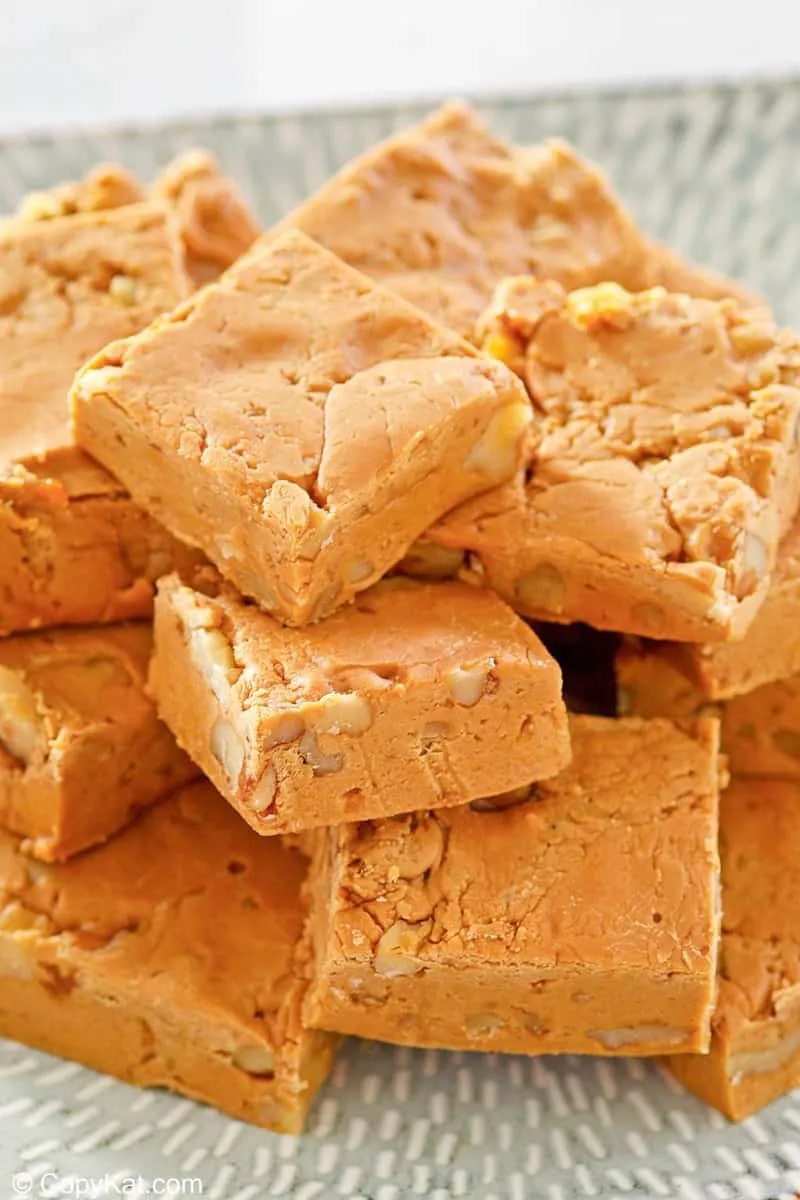
This old-fashioned buttermilk fudge is the kind of candy my grandmother made every Christmas, and one bite brings back that memory. The buttermilk gives it a tangy, caramelized flavor that sets it apart from ordinary chocolate fudge, and the walnuts add a nice crunch against the silky texture. It's a simple recipe, but the technique matters: you cook the sugar and buttermilk to the soft-ball stage, then beat it until it turns creamy.
What Sets This Buttermilk Fudge Apart
- The tangy buttermilk balances the sweetness, giving the fudge a more complex flavor than plain chocolate fudge.
- The walnuts add a toasty crunch that contrasts with the smooth, creamy texture.
- It's a straightforward recipe that uses pantry staples, and the soft-ball stage is easy to hit with a candy thermometer.
Key Ingredients for Authentic Buttermilk Fudge
- Buttermilk gives the fudge its tangy flavor and reacts with the baking soda to create a creamy texture. Use full-fat buttermilk for the best results. If you don't have buttermilk, you can make a substitute by adding 1 tablespoon of lemon juice or vinegar to 1 cup of milk and letting it sit for 5 minutes.
- Walnuts add a crunchy contrast to the smooth fudge. Toast them lightly in a dry skillet for extra flavor. You can also use pecans or almonds.
- Baking soda helps neutralize the acid in the buttermilk and contributes to the fudge's smooth, creamy consistency. Don't skip it.
Kitchen Tools for Making Buttermilk Fudge
- Large heavy saucepan or Dutch oven: holds the mixture and distributes heat evenly.
- Candy thermometer: essential for hitting the soft-ball stage (234-240°F).
- Pastry brush: for washing down sugar crystals from the sides of the pan.
- Electric mixer: for beating the fudge to the right consistency.
- 8x8-inch pan: for setting the fudge.
Tips for Making the Best Buttermilk Fudge
- Use a candy thermometer to monitor the temperature. The soft-ball stage is 234 to 240°F, and getting it right is the difference between creamy fudge and a sugary mess.
- Don't stir the syrup once it comes to a boil. Stirring can cause sugar crystals to form, which makes the fudge grainy.
- Wash down the sides of the pan with a pastry brush dipped in hot water while the sugar is dissolving. This prevents crystals from forming on the pan walls.
- Let the fudge cool to 200°F before beating. Beating too early can make it grainy, and beating too late can make it set up too quickly.
- Beat the fudge until it loses its gloss and thickens. This usually takes a few minutes with an electric mixer on medium speed.
Buttermilk Fudge Variations to Try
- Swap the walnuts for pecans or almonds for a different nutty flavor.
- Fold in 1/2 cup of chocolate chips after beating for a chocolate-studded version.
- Add 1/2 teaspoon of cinnamon and a pinch of nutmeg for a spiced holiday twist.
- Omit the nuts entirely for a smooth, nut-free fudge.
Serving Ideas for Buttermilk Fudge
- Sprinkle a little flaky sea salt on top for a sweet-salty contrast.
- Add extra chopped walnuts on top before the fudge sets for a crunchier finish.
- Serve alongside a cup of strong coffee or black tea to cut the sweetness.
- Include it on a holiday dessert platter with other candies and cookies.
How to Store Leftover Buttermilk Fudge
Store the fudge in an airtight container at room temperature for up to two weeks. If you prefer a firmer texture, you can refrigerate it, but let it come to room temperature before serving. Layer the pieces with wax paper to keep them from sticking together.
Can You Freeze Buttermilk Fudge?
Yes, this fudge freezes well. Wrap the cooled, cut pieces tightly in plastic wrap, then place them in a freezer-safe container or zip-top bag. Freeze for up to three months. Thaw in the refrigerator overnight before serving.
Source recipe: Buttermilk Fudge (SnapChef ID 80a7e52e-5290-44f7-aa4d-8056c44703c3). Nutrition is estimated per serving.
Ingredients
Directions
- Butter the sides of a large heavy saucepan or Dutch oven.
- Combine the first 5 ingredients (sugar, buttermilk, butter, corn syrup, baking soda) in the buttered saucepan and cook over medium-low heat, stirring constantly until the butter melts and the sugar dissolves. Use a pastry brush dipped in hot water to wash down any sugar crystals on the sides of the pan.
- Increase the heat to medium and bring to a boil. Do not stir while the syrup is boiling. Continue to cook until the syrup reaches the soft-ball stage (234–240°F).
- Remove from the heat and add vanilla. Do not stir until the syrup cools to 200°F.
- Using an electric mixer on medium speed, beat the fudge until it thickens and is no longer glossy.
- Stir in the walnuts.
- Pour the mixture into a buttered 8×8-inch pan.
- Wait until the fudge cools completely then cut into squares.
- Store in an airtight container.
Tap a step number to check it off as you cook.
Nutrition Facts per serving · estimated
Amount per serving
% Daily Values are based on a 2,000-calorie diet (FDA).
Good to know
Questions, answered
Why did my fudge turn out grainy?
Grainy fudge usually happens when sugar crystals form. This can occur if you stir the syrup while it's boiling, or if you don't wash down the sides of the pan. Make sure to use a pastry brush with hot water to keep the sides clean, and avoid stirring once the mixture boils.
Why is my fudge too soft?
If the fudge doesn't set, it likely didn't reach the soft-ball stage (234-240°F) or wasn't beaten long enough. Use a candy thermometer to ensure the temperature is correct, and beat until the mixture thickens and loses its gloss.
Can I use buttermilk powder instead of liquid buttermilk?
Yes, you can reconstitute buttermilk powder according to the package instructions to make 1 cup of buttermilk. The flavor will be slightly different, but it will work.
Can I make this fudge without a candy thermometer?
You can use the cold water test. Drop a small amount of the syrup into a bowl of cold water. If it forms a soft ball that flattens when removed, it's at the soft-ball stage. But a thermometer is more reliable.